A Cooperative Learning Project
Let’s start with the soil prep. We started preparing the soil last Saturday, the 17th. That was when Mike and Alan dug up the plot with with a motorized rotary tiller. Then yesterday, to loosen it up still further down — to about 10 inches or so — we went at it with our garden forks. Since collards produce tap roots as long 15 to 18 inches, we hope this first 10 inches of fluffed-up soil gives them a good start.
The results from the Ag Center at U Mass Amherst told us the soil was pretty anemic and too acidic. To fortify and sweeten it, we mixed into it a good deal of compost, some dried-out chicken poop and cow manure, plus what seemed like a ton of pelletized lime.
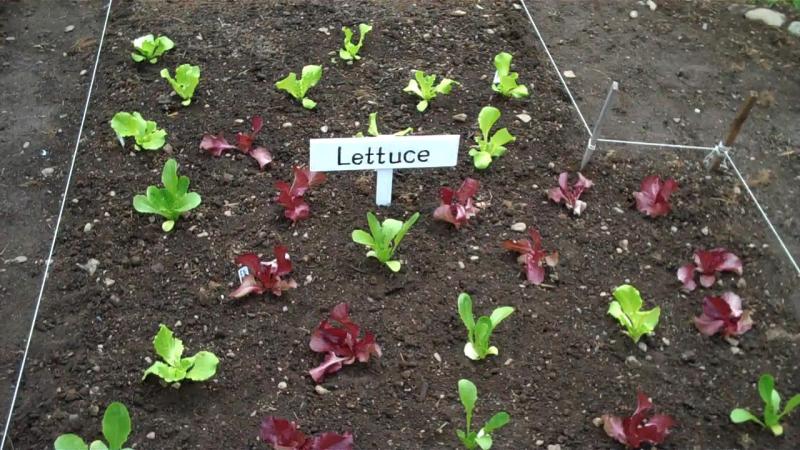
Now the planting. For the collard greens, we planted three rows of seeds. They’re in the center of a 6 x 9 foot section that plays host on one side to Swiss chard and on the other to two varieties of kale, the collards’ closest cousin.
Seeds for collard greens are tiny. We spread them fairly densely along their three rows, with the idea of thinning the less successful seedlings out later.
Then we covered the seeds with about 1/2 inch of dirt and watered each row with a sprinkling can, so as not to disadvantage any of our promising young contenders.
Seeds for collard greens are said to germinate fairly quickly. So we expect to see their sprouts some time next week or the beginning of the week after that.
This type of collards — Georgia, from Burpee — is supposed to reach full maturity in about 75 days. That means the first or second week in July. We’ll start harvesting leaves, though, probably a good month before that.
Speaking for myself, I love collard greens, though I’ve never grown them, never cooked them. We’ve always gotten our collards, Saturday afternoons, at the basement kitchen of the United House of Prayer for All People, on Seaver Street in Dorchester. Great soul food there.
I look forward to trying my own hand at fixing collards. But I doubt they’ll be nearly as good.

Swiss chard seeds were planted in the garden today. Like the other cold-tolerant crops (peas, kale, lettuce and the cabbage family) they could have gone in a few weeks sooner. The wonderful thing about planting swiss chard is the big seeds (almost the size of peas and far less smooth, they’re among the few seeds you can plant in a stiff breeze).
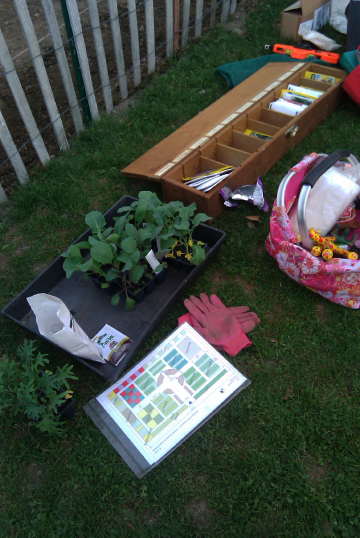 We gathered for our first evening gardening assignation, nice temperature, post- and pre-rain so a perfect window. We put in the beautiful seedlings from Waltham Fields Community Farm, lettuces and kale and caulifl
 ower and broccoli, and we planted peas from seed, both bush- and pole-types.
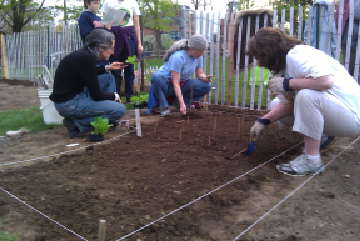
 It was a busy plot! And everyone had something to do. Digging a little deeper
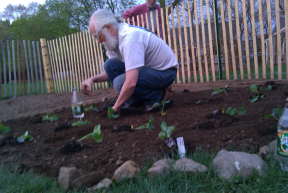 than the rototiller had gone, we even had another major boulder for young Desmond to roll away. Lisa had fortuitously assigned herself the water-bearing so we had some moisture to give the seeds and seedlings; thank heavens she hadn’t recycled those plastic bottles, clever girl. A few more sympathetic visitors came by with good wishes. By the time light was vanishing we had everything in and could part hoping the rain would come on Earth Day (which it did, with noise and fury).
The weather having prevented a pea-planting Saturday, a number of us instead took the opportunity to visit Waltham Fields Community Farm for their first seedling sale. Besides the crops we won’t be starting from seeds at all, like tomatoes and peppers, there are cool-weather crops we knew we could get in seedlings from our Waltham colleagues or other sources to give the garden an early start. Some of these are items we’ll also plant from seed in a few weeks, letting new generations of plants succeed the first (succession planting).
On the way to Waltham we took a delightful sidetrip to Belmont Victory Gardens, a real surprise to most of us. The plots are large and fenced, and many are well-established; some had made use of storm windows to create greenhouses in situ. Garlic was in evidence on many plots, and flowers here and there had us dreaming of a spring Robbins Farm Garden with welcoming color.
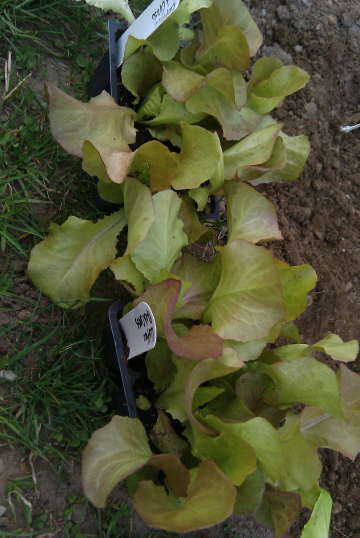
The midday at Waltham included sitting in on a bit of Arlington resident and Robbins Farm friend Russ Cohen‘s "Edible Wild Plants" presentation, accompanied by splendid treats, including pie made with Japanese knotweed! His culinary abilities with invasives are outstanding. We cut the viewing short to attend the seedling sale and were very impressed with the offerings. We came away with ten 6-packs, of various lettuces, cabbage, broccoli, kale and cauliflower. All but the lettuces are ground-ready (the lettuces need a few more days indoors), and our plan at the moment is to convene Wednesday evening to put our first plants in the Robbins ground.
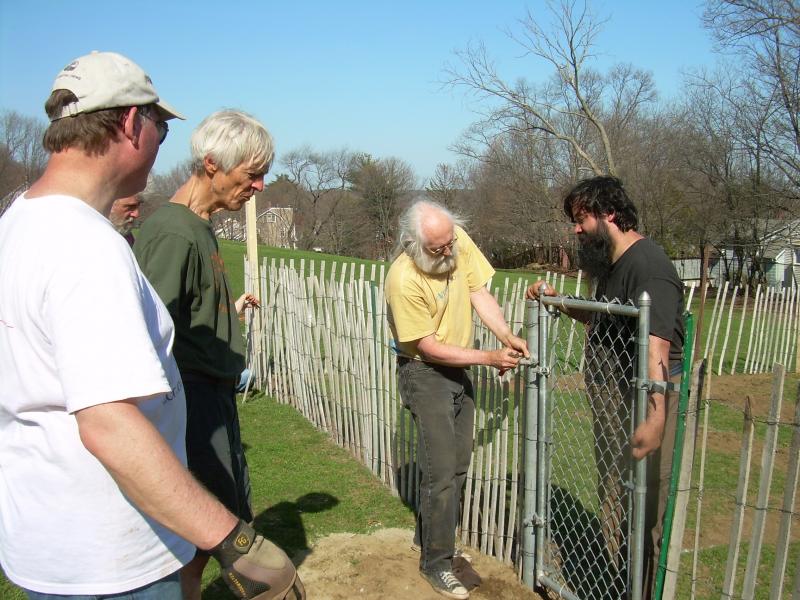
Several days past the *most recent* torrential rains, the kites and children were out to enjoy Robbins Farm Park, and the Garden took shape. The fence is up, the postholes are dug, the gate is in and swings, and a lot of tired gardeners achieved a great deal on a stunning spring day.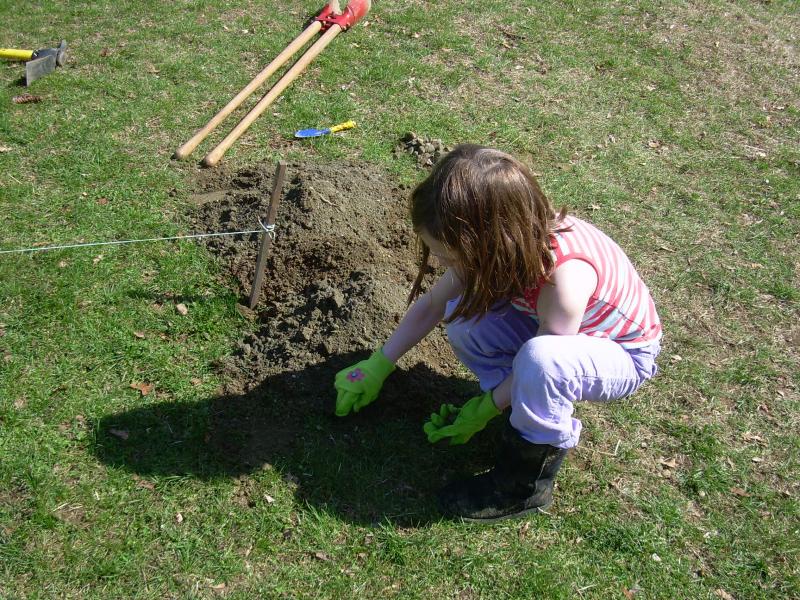
We showed up around 9 to try to find the chunks of wood we had sunk at the corners of the garden-to-be just a week ago, also inches of rain ago. Not so easy…but eventually the first one was found and the others followed. We also found a bounty of donated 2x4s (thank you Shannon and thank you Brendan Driscoll, Arlington contractor!), tools of all stripes as we all arrived, and visitors already curious what was happening.
Within a couple of hours the holes for the corner posts (doubled-up 2x4s) were well underway, not to say finished what with a fine New England crop of stones; the day would not have been complete without a monstrous rock that nonetheless gave it up to sweat and muscle power (Bailee on deck for the finishing touch) 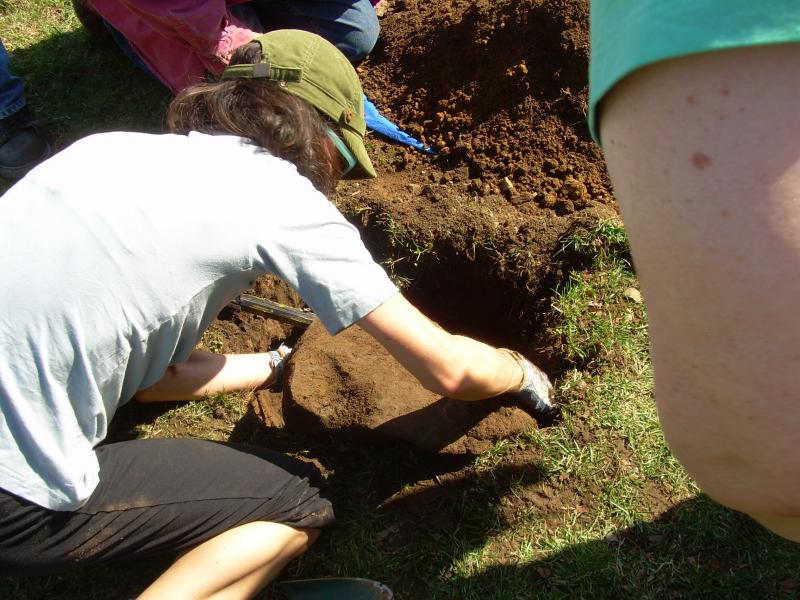 and was dislodged from exactly where we needed a corner post to go. It graces the garden’s center, for the moment. Everyone had a shot at digging, our youngest participants bringing especial gusto to the enterprise (thank you, Lauren, Shannon’s daughter and Desmond, Mary Ellen’s son!).
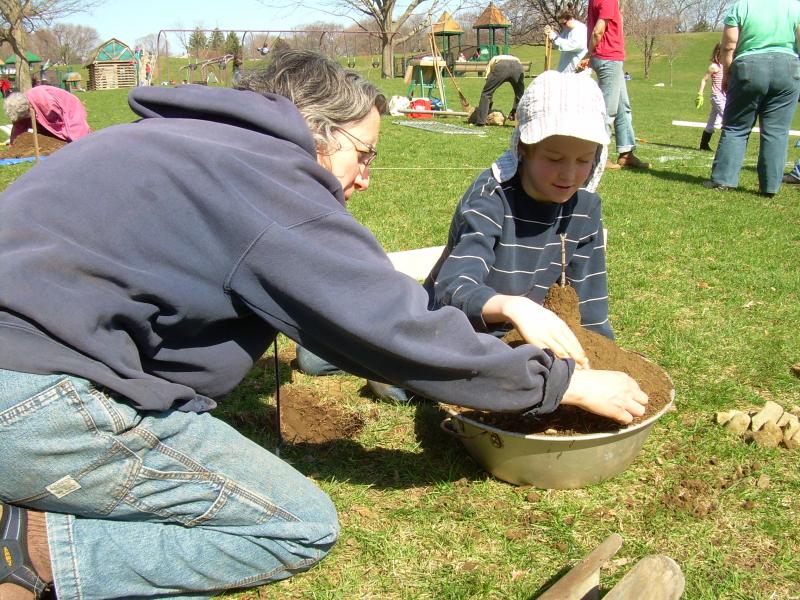 Meanwhile the lines for paths were laid out with our favorite dessert topping, spray-chalk-in-a-can, and removal of sod could begin. Erika developed
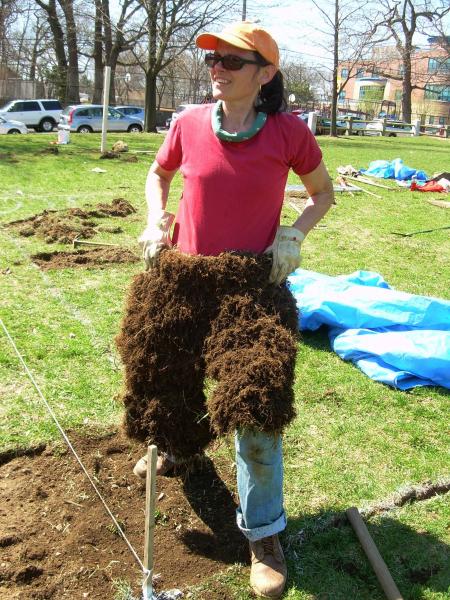 a technique for removing strips of rolled-up sod, and Steven and Dick carted it away to build a golf course just east of the garden (not really–they were filling in sinkholes that create drainage issues for our neighbors to the east).
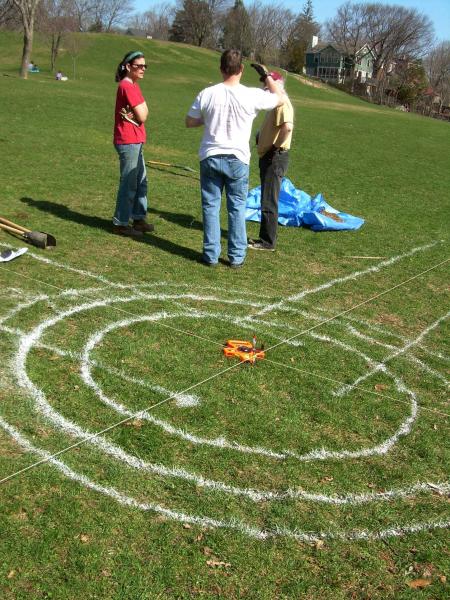
As we dug, we marveled at the healthy number of earthworms, Steven monitoring their well-being since they’re our best friends going forward. The compost bin was set up and seeded with turf and worms. After a well-earned lunchbreak, it was decided to go ahead and claim the snow fence in place north of the garden site–it was due to be removed by Parks and Recreation, and given the natural preoccupation of P&R with flooding issues lately, we hoped we were doing them a favor. The condition of the fence is not all we could hope for, but our repairs to it helped somewhat, replacing decrepit slats and filling in gaps.
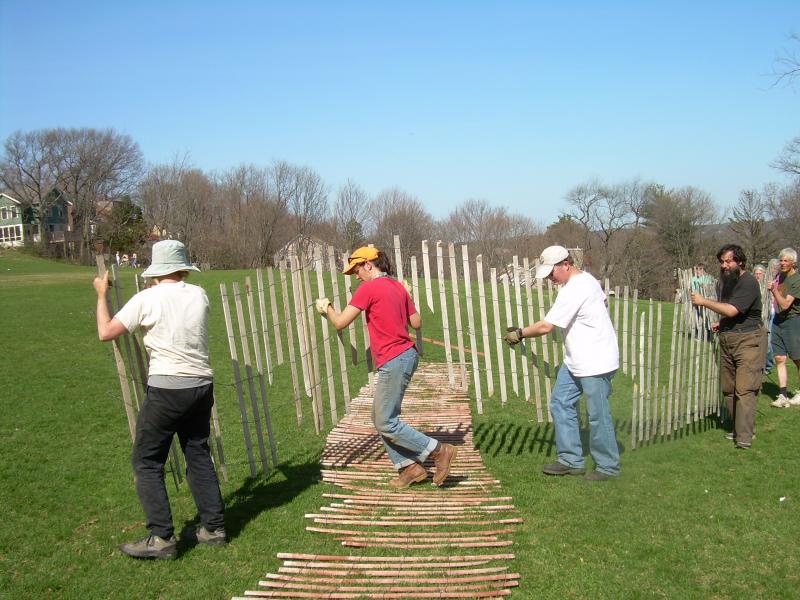 Meanwhile Alan and Mike and Steven worked to get the salvaged gate in place. With only one nut missing, and a beautifully seated post complete with its own attached concrete hunk, it isn’t going anywhere. Oakes and Elisabeth pounded in stakes for the fence, avoiding calamity with the beautiful green but rickety stepladder. Oakes exhorted Melanie to take photos a la paparazzi which she found not quite in her nature; nonetheless, 90 were taken.
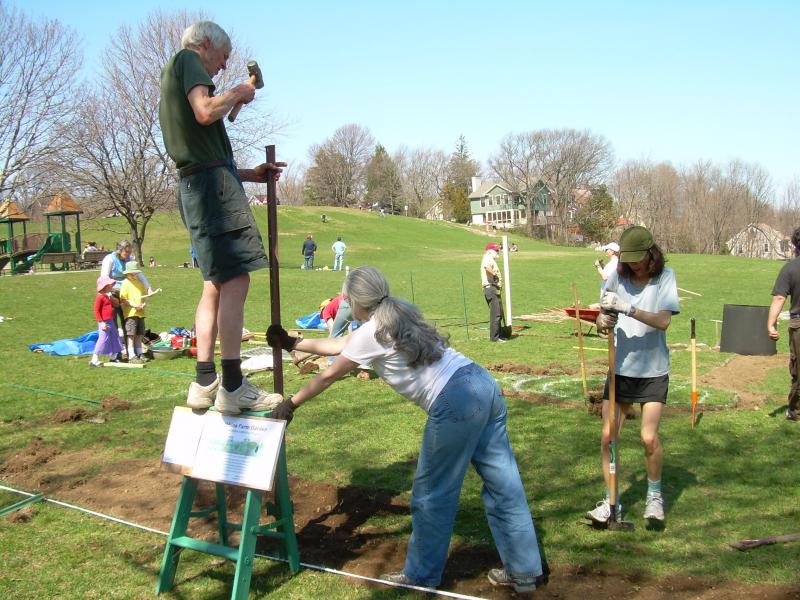
The outlines of the garden, in stripped turf, are clear; the sign is up to let off-hours visitors know what we’re about, and the fence we hope will hold until we can secure more slats. We gathered under our nearest tree to collapse and consider the day, exhausted puppies.
It was especially gratifying to see the number of adults and parents and children and dogs interested and seeming pleased that such a project is happening. We hope a few of them may look more deeply into becoming members.

Copyright Robbins Farm Garden 2010-2025. All rights reserved. Site design by Carr-Jones, Inc.