• Skip to primary navigation
  • Skip to main content
  • Skip to primary sidebar
  • Skip to secondary sidebar
  • Skip to footer

Robbins Farm Garden

A Cooperative Learning Project

  • About the Garden
  • Membership & Rules
  • Veggie School
  • Local History
  • Contact Us
  • 2022 Crops List
  • 2022 Garden Plans
  • 2022 Garden Schedule
  • 2022 Photos
  • 2022 Finances

Elisabeth

Cabbage Runts Pulled

June 29, 2010 by Elisabeth

cabbge runts 
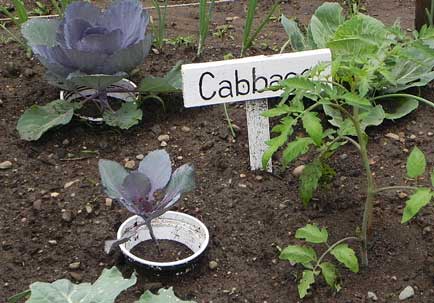
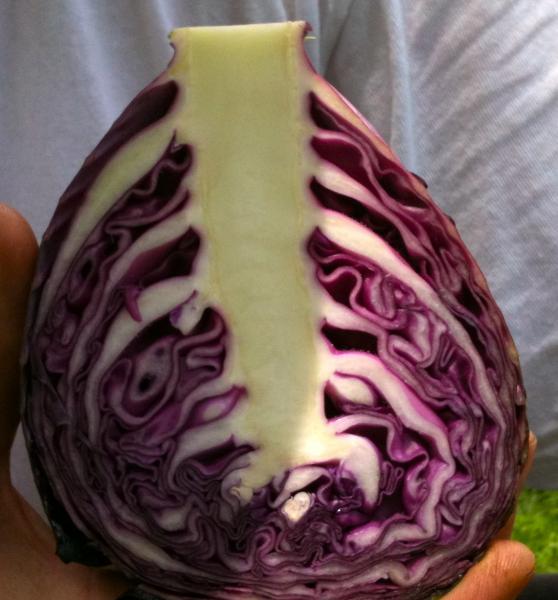
We harvested one red cabbage Saturday.  But some cabbage plants looked like they were not going to do much.  So the decision was made to cull the runts.  Most of these had cutworm collars, leading one gardener to speculate that maybe cutworm collars somehow stunt the growth.  However, it was pointed out that the cutworm collars, placed about a week and a half after the seedlings were planted, were placed especially around those seedlings having trouble.  One wonders at why some cabbages did better than others.  Was it the transplanting?  (i.e. some rootlets might have been more disturbed than others)  Was it some early attack on the seedling by a pest?  Or was it just that some do better than others?

Meanwhile, the tomato committee appropriated the liberated area.
Filed Under: Uncategorized Tagged With: cabbage, tomato

Cauliflower Taste-Off!

June 29, 2010 by Elisabeth

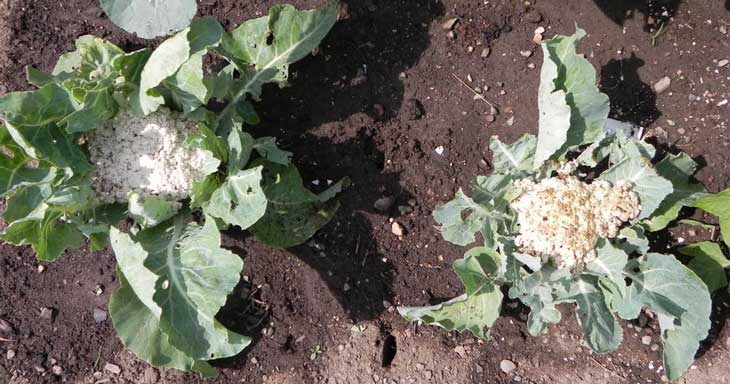
We had three cauliflower, one of which was sneakily harvested by the Wednesday gardeners.  That still left us two cauliflower for harvest on Saturday:  one of which had its leaves tied up for blanching, the other left exposed.  While there was a clear visual aesthetic difference, the real question was of taste.  Two of us did (nonblind) comparisons.  We agreed that the blanched cauliflower was slightly sweeter, but that the unblanched cauliflower was still tasty enough.  Alan also pointed out that when cooked, the coloring of the unblanched drains away anyways.
Also, we planted some cauliflower seeds Saturday to have more later in the season.

Coke vs Pepsi
Coke or Pepsi?

Filed Under: Uncategorized

Persnickety Pests Prefer Soybeans

June 29, 2010 by Elisabeth

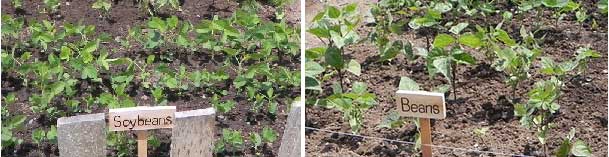
We are growing two different kinds of beans:  bush beans and soy beans.  The soy beans have been repeatedly attacked by plant-eating pests, while the bush beans have escaped unscathed.  Some weeks ago, with the beans just poking their heads out of the ground, one gardener was concerned that the leaves were being eaten already.  But these were not true leaves, but cotyledons, which come from part of the seed.  In the two weeks which followed, though, as the true leaves emerged, pests continued to eat at the soy bean plants.  I wonder what they know?  Nevertheless, the soy bean plants themselves have been producing more leaf than is being eaten.

This situation makes a point about pesticide use as well.  Yes, perhaps a heavy dose of pesticide might have eliminated any leaf-eating.  But the soybean plants are clearly thriving despite the pests.  Maybe pesticides aren’t as useful or needful as advertised.

Filed Under: Uncategorized

Sunday visits

June 28, 2010 by Elisabeth

Yesterday, I opened the garden from about 2-5. Perhaps a dozen families, maybe 15 or 16 even, visited, expressing a lot of admiration. We are really looking pretty sharp, not a weed to be seen! Thanks Michael (and others)! My routine is to walk up to the playground and invite people down. A few families come on their own, or are walking by. Some were interested enough that I invited them to come by Saturday when everyone is there. A number took cards, and I gave out some peas here and there.

Filed Under: Uncategorized

Determinant and indeterminant

June 28, 2010 by Elisabeth

I’ve heard the words of my headline tossed around the garden this spring, figuring they meant something but not getting the concepts entirely. But I think I have it now, and it’s worth sharing. (Or so I think; you decide.)

The times I’ve heard the terms tossed, the subject was tomatoes. According to this tomato-growing site, determinant varieties, including the well-known Roma variety, grow to a roughly defined height, stop growing when the fruit sets at the end of each branch, ripen about the same time, and then die.

Indeterminants keep growing until frost — flowering, setting fruit, and ripening all at the same time, on different stalks.

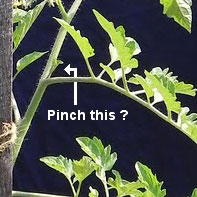
Pinch meRecently, my gardening mate Michael Smith, who horticultures for a living, shared a brief film on pinching out young tomato-plant branches that I later realized are what others call "suckers," another term I’d heard but didn’t quite grasp. (There’s a lot of that for me in the presence of actual gardeners.)
After watching, I went out into my own garden and pinched — or clipped — all the suckers, which are identified as growths emanating from the juncture of the main stem and a side shoot. The reasoning, as I understand it, is that these suckers will make the plants bushier, bringing no advantage, at the expense of energy that would better be applied to the fruit. 

Then I noticed that my eggplant plants also have suckers, and wondered if I should cut them out, too. Luckily, I didn’t. I asked around among the gardeners and got no definitive answer, though one guy said he thought it made sense, and another observed that both tomatoes and eggplants are from the nightshade family.

Turns out, according to a consensus of websites I found, though none authoritative enough that I’d link to, that eggplants are determinant, so every branch I cut off would just be limiting yield, instead of concentrating energy in the "right" places.

There still remains the question of whether all eight of my tomato plants are indeterminants. That’s something I ought to know, but don’t.

Filed Under: Uncategorized Tagged With: eggplant, tomato

A garden’s bounty

June 27, 2010 by Elisabeth

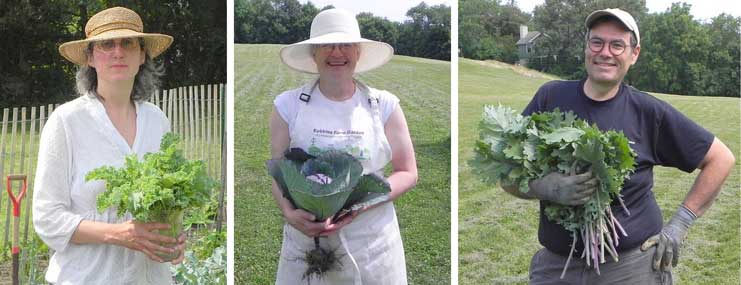
curly kale, red cabbage, Russian kale
Curly Kale : Mary Ellen  . . .  Red Cabbage : Elizabeth  . . .  Russian Kale : Michael

Filed Under: Uncategorized Tagged With: cabbage

« Previous Page
Next Page »

Primary Sidebar

2026

  • 2026 Crops List
  • 2026 Garden Plans
  • 2026 Garden Schedule
  • 2026 Watering Schedule
  • 2026 Photos

2025

  • 2025 Crops List
  • 2025 Garden Plans
  • 2025 Garden Schedule
  • 2025 Watering Schedule
  • 2025 Photos
  • 2025 Finances

2024

  • 2024 Crops List
  • 2024 Garden Plans
  • 2024 Garden Schedule
  • 2024 Photos
  • 2024 Finances

2023

  • 2023 Crops List
  • 2023 Garden Plans
  • 2023 Garden Schedule
  • 2023 Photos
  • 2023 Finances

2022

  • 2022 Crops List
  • 2022 Garden Plans
  • 2022 Garden Schedule
  • 2022 Photos
  • 2022 Finances

2021

  • 2021 Crops List
  • 2021 Garden Plans
  • 2021 Garden Schedule
  • 2021 Photos
  • 2021 Finances

2020

  • 2020 Crops List
  • 2020 Garden Plans
  • 2020 Garden Schedule
  • 2020 Finances
  • 2020 Photos

2019

  • 2019 Crops List
  • 2019 Garden Plans
  • 2019 Garden Schedule
  • 2019 Finances
  • 2019 Photos

2018

  • 2018 Crops
  • 2018 Garden Plans
  • 2018 Garden Schedule
  • 2018 Photos
  • 2018 Finances

2017

  • 2017 Crops
  • 2017 Garden Plans
  • 2017 Crop Schedule
  • 2017 Photos
  • 2017 Finances

2016

  • 2016 Crops
  • 2016 Garden Plans
  • 2016 Crop Schedule
  • 2016 Finances
  • 2016 Expenses

2015

  • 2015 Crops
  • 2015 Garden Plans
  • 2015 Crop Schedule
  • 2015 Finances
  • 2015 Expenses

2014

  • 2014 Crops
  • 2014 Garden Plan
  • 2014 Crop Schedule

2013

  • 2013 Crops List
  • 2013 Garden Plan
  • 2013 Crop Schedule
  • 2013 Photos

2012

  • 2012 Crops
  • 2012 Garden Plan
  • 2012 Crop Schedule

2011

  • 2011 Crops
  • 2011 Seeds
  • 2011 Garden Plan
  • 2011 Expenses
  • 2011 Project Proposal
  • 2011 Supporters

2010

  • 2010 Crops
  • 2010 Seeds
  • 2010 Expenses
  • 2010 Supporters
  • 2010 Veggie Adoptions
  • 2010 Pilot Project Report

Recipe Collection

Log In

Members Only

  • Contact information
  • Log Out

Secondary Sidebar

Footer


Copyright Robbins Farm Garden 2010-2025. All rights reserved. Site design by Carr-Jones, Inc.

Copyright © 2026 · Genesis Child Theme for Robbins Farm Garden on Genesis Framework · WordPress · Log in