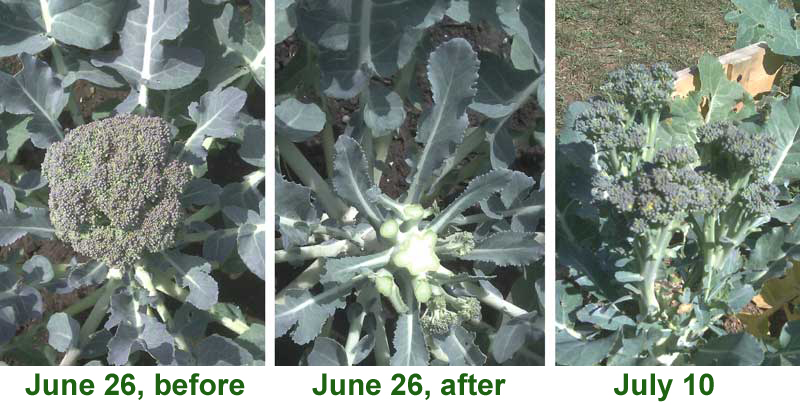
We harvested our first brocolli on June 26, 66 days after planting the seedlings. We didn’t cut too low on the stem, and left a few little sprouts below the cut. Two weeks later, on July 10, we had a second harvest almost as big as the first. Two harvests is about all you can get, and the brocolli was getting ready to bolt after the recent hot weather, so we pulled them and started a seedling nursery for the late-season crops.
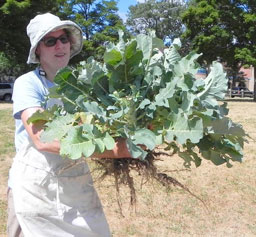
A giant bouquet of pulled brocolli leaves, headed for the compost bin.
The new nursery.
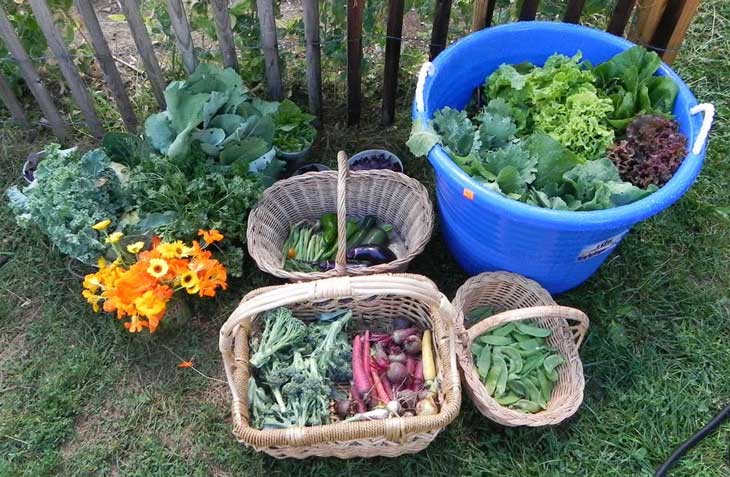
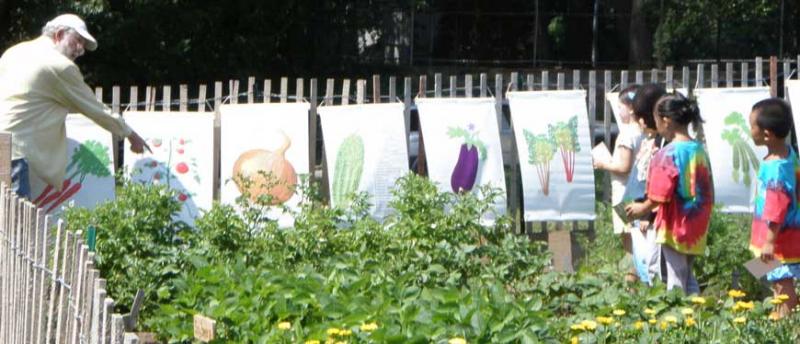
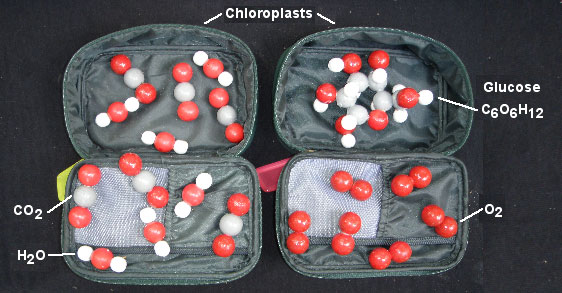 The 5th and 6th graders skipped the Name and Find exercise altogether. We talked about life cycles, parts of the plant, bugs, a few histories of the students’ favorite veggies, and — for many, the highlight of the class — the magic of photosynthesis. We walked through the mechanics, using painted wood models of the processes’ input and output molecules, then discussed the critical reciprocity between plants and animals, the carbon dioxide and oxygen exchange that literally sustains most life here on earth.
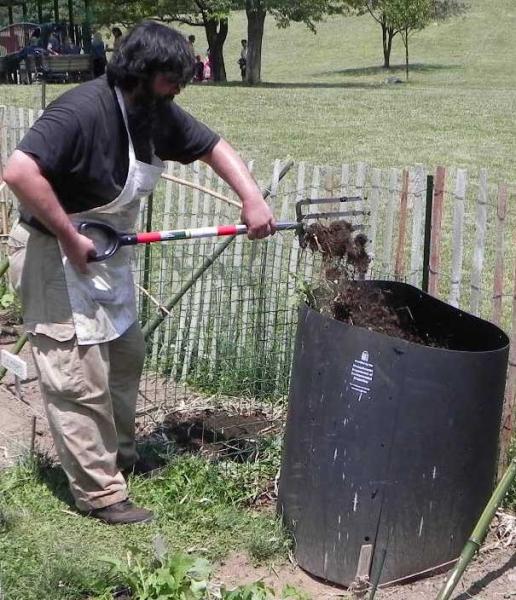 To gardeners, wealth is in the ground. And rich soil is made richer by adding lushly black compost. The last Saturday in June, we harvested our first batch of compost, much earlier than I expected.
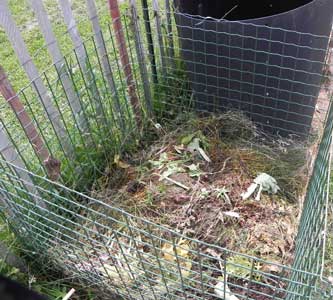 The top was wet and slimy — the result of adding clippings of grass from the fence edge. The sliminess results from suffocation, and therefore simply remedied by turning. A suffocating compost pile will give off an ammonia-smell from the anerobic bacteria. But in our case, there was little smell, because below the layer of grass was nicely composted soil. I was a bit worried about the straw added the previous week, as I feel it decomposes slowly, but it may have provided some aeration to the lower mass.
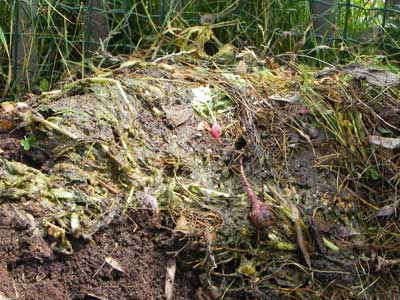 We sifted the compost as we extracted it, using a rectangular frame with a wire mesh about 1/4-inch fine. The plastic tray we used to sift into cracked, so next time we’ll bring a wheelbarrow to sift into. Sifting allows earlier use of ready compost, as different materials decompose at different rates, and were put into the compost pile at different times. The apple cores and banana peels of April were completely decomposed, but the straw of the previous week was quite present. I had been keeping the compost moist by covering it, since hydration speeds decomposition. Compost should be kept about as wet as a damp-to-wet sponge, to give room for air, which soaking wet does not. The downside is that wet compost is harder to sift, but we managed.
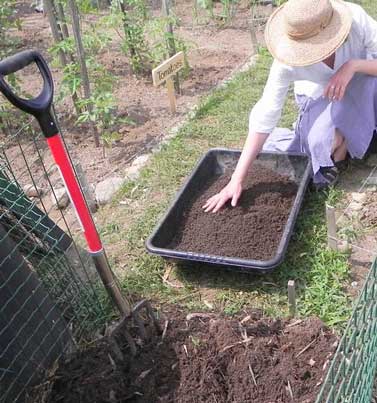 We extracted several buckets of the "black gold" which was then used to "top-dress" a number of vegetables. The compost thus put around the plants served two purposes: first, nutrients from the compost will leach into the soil to feed the plants. Second, the compost also serves as a mulch, keeping sunlight from reaching new weeds. We also put some compost into the holes destined for transplanted tomatoes. This is a better location than the soil-top, as the plants have yet another reason to send roots downwards (which makes them more robust during dry spells).