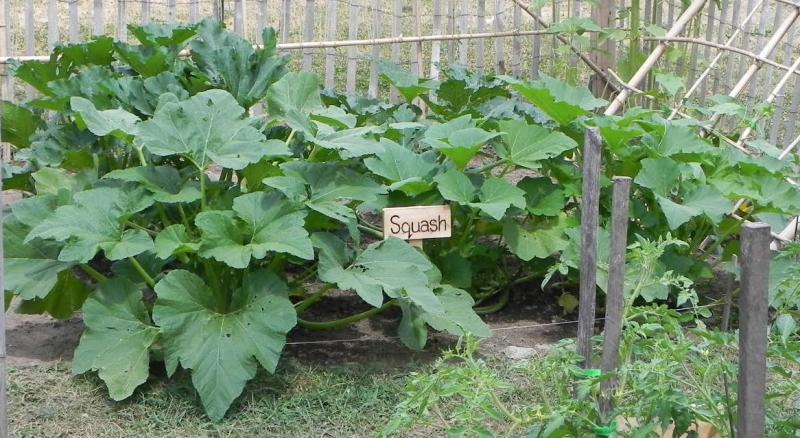
 The zucchinis are overwhelming their plot, and the harvest is in full swing.
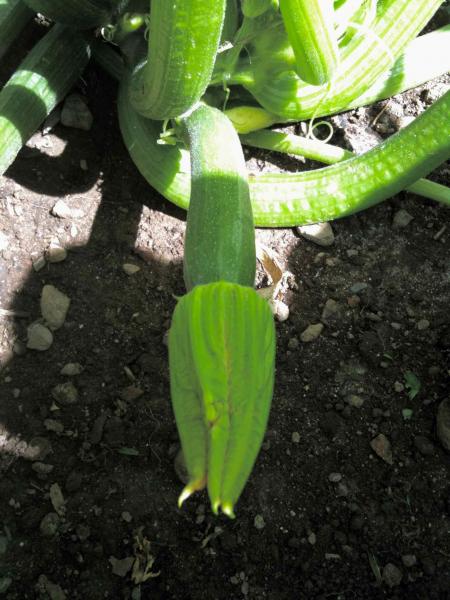
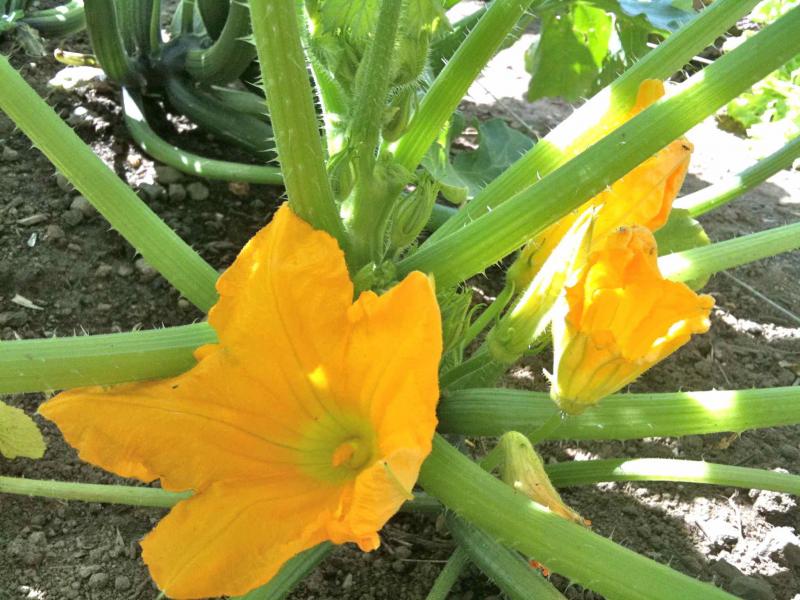
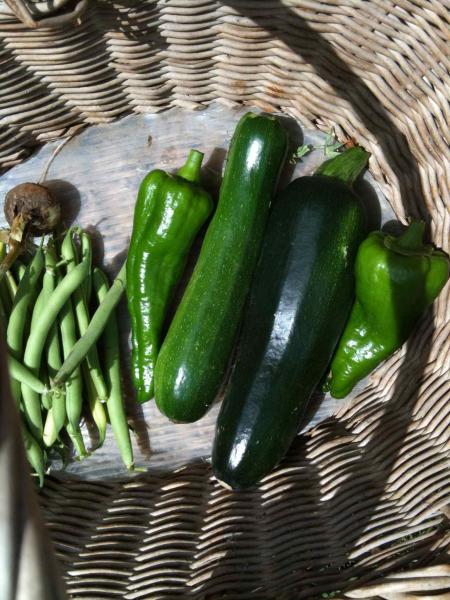
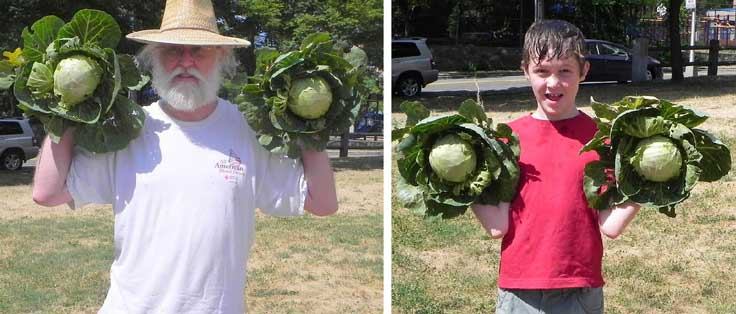
These photos are from last Saturday:
A Cooperative Learning Project
The zucchinis are overwhelming their plot, and the harvest is in full swing.
These photos are from last Saturday:
I opened the garden for a couple of hours Tuesday.
Again, we had several Asian-Americans coming to visit, including one a couple who had just arrived from Beijing! The man practiced his English on me. They have different gardening customs, which I can’t quite repeat. For instance they do not plant cabbages in the spring.
A little later, after Michael had come by with baby Joe, an Indian family visited — a dad and three kids who were very enthusiastic. They asked about several of the crops, including which ones were being grown for what was underground, and the elder girl (9 or 10, maybe?) warned that when we harvest the zucchini, we should be wary of the little spines that could hurt.
Their dad liked our garden and wanted to be in touch with us. He said he is psyched that we are adding to the town’s culture, which he, himself, was also doing: He told us about a townwide Scrabble tournament at the library on Wednesday. Unfortunately for us, he said it was closed to those who had graduated high school.
[Michael P. contributed to Oakes’ report.]
I opened the garden for an hour and a half yesterday afternoon. Though there were dramatic rains in both Lexington and Boston, none here! Even so, the garden looked well watered.
A nice group of Asian-American mothers and children came to visit. They remarked on the eggplants (great purple blossoms), the amaranth, and the tomatoes. Earlier a mother with two daughters enjoyed finding the hidden zucchini. Several people took the cards.
I tried to draw the amaranth and the basil, impossible as usual.
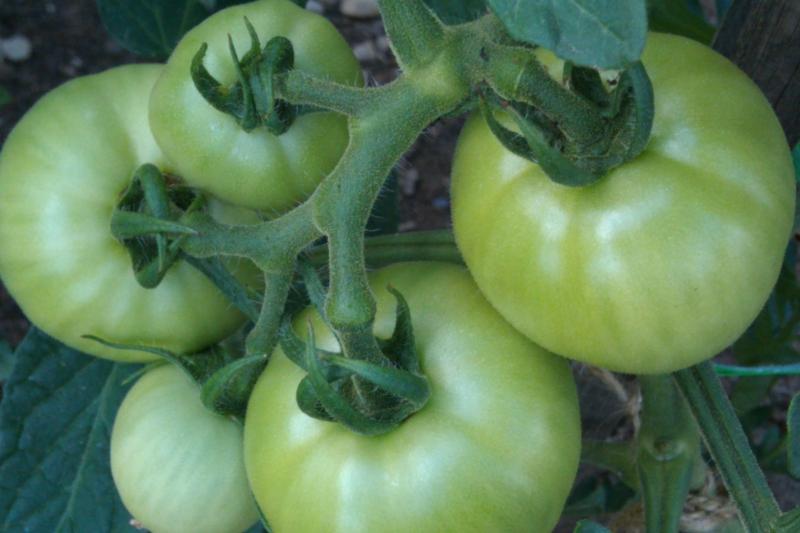
The tomato patch is full of promise, from the insanely huge clusters, galaxies, of flowers on the Blondkopfchen to the fully fleshed fruits of a neighbor. The Blondkopfchen, "little blond head", is producing true to its description in the Seed Savers catalog, "enormous yields and never a cracked fruit" (we’ll be happy to see the latter). All that and it is said to bear until frost!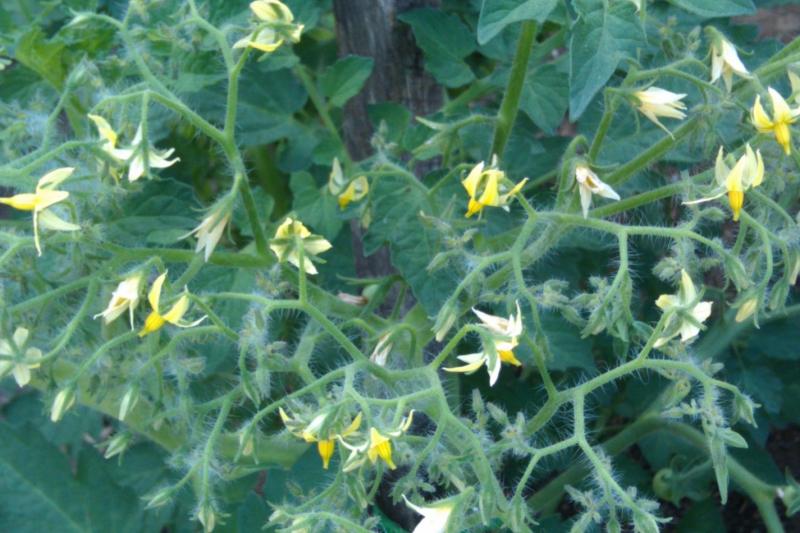
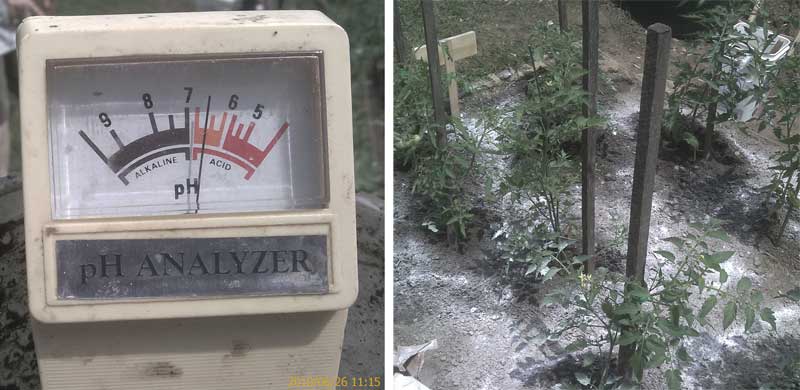
When we first opened the garden, we had the soil tested, and the pH (acid/alkaline balance) was very low, about 5.8. We added 170 lbs of lime when we dug it up – about 17 lbs/100 sf. We checked the soil again on June 26 in a few spots around the garden, and the pH was around 6.6, which is just about perfect for most vegetables. It takes a while for the lime we added in April to change the soil chemistry, so we wanted to verify that we’d added enough. Every time it rains, the soil becomes a little more acid, so we need to keep checking and adjusting throughout the season.
We lightly dusted lime around the plants that have a sweet tooth (cauliflower, broccoli, tomatoes, beets and greens). Some plants (potatoes, eggplant) like it a bit more acidic, so we did not add any lime to those beds.
We used calcitic lime (plain ordinary powdered limestone, or calcium carbonate) because it adds a quick shot of calcium to the soil, to help prevent blossom end rot on the tomatoes.
Soil pH is important because plants won’t absorb nutrients from the soil as well if the pH is too high or too low. A good introduction to soil pH is here, on the UMass Extension web site.
Did you know that farmers used to check their pH by tasting the soil?

Copyright Robbins Farm Garden 2010-2025. All rights reserved. Site design by Carr-Jones, Inc.