Lots of tasty salads tonight!
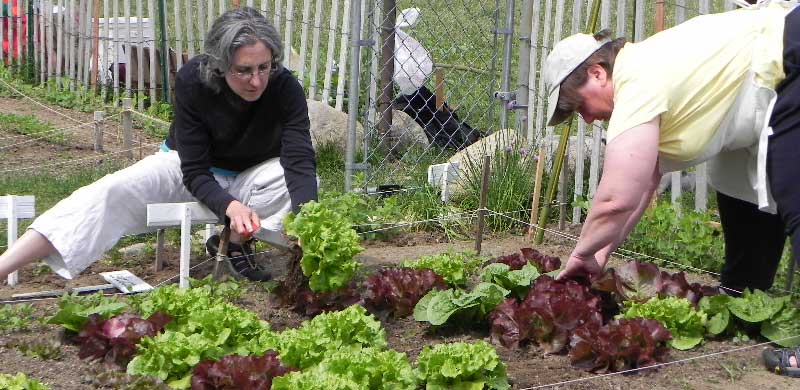
A Cooperative Learning Project
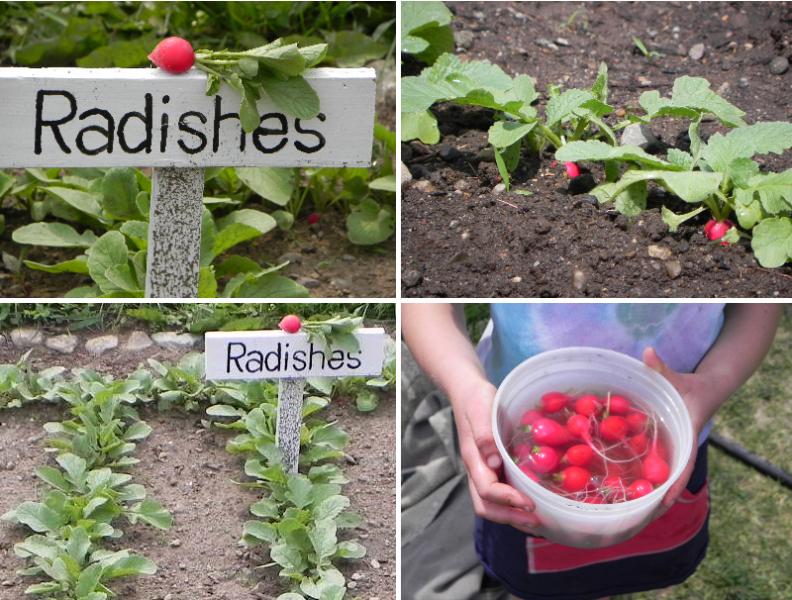
Today we harvested our first radishes. They were planted as seed just 4 weeks ago.
Radishes truly are the hot rods of the vegetable world.
Beans were planted today, both soy beans and bush beans. Or rather, some of them. If beans are planted all at once, they arrive pretty much all at once. Instead, we’re spacing plantings two weeks apart, so that they arrive spread out over many weeks.
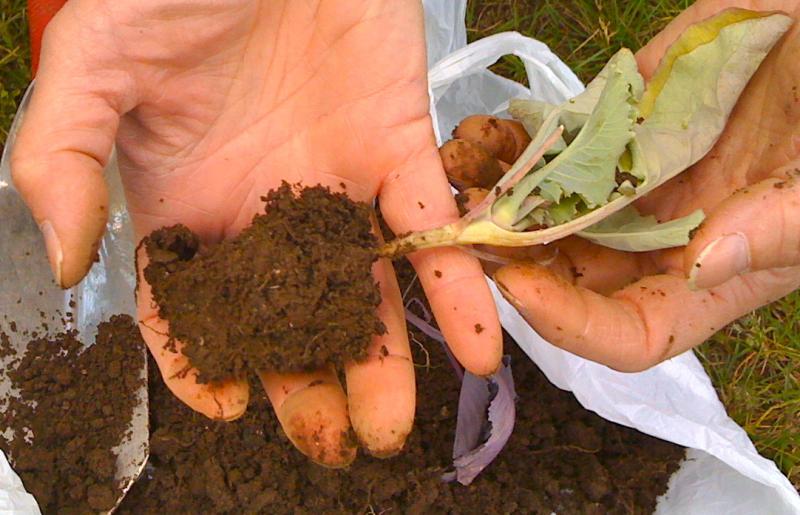
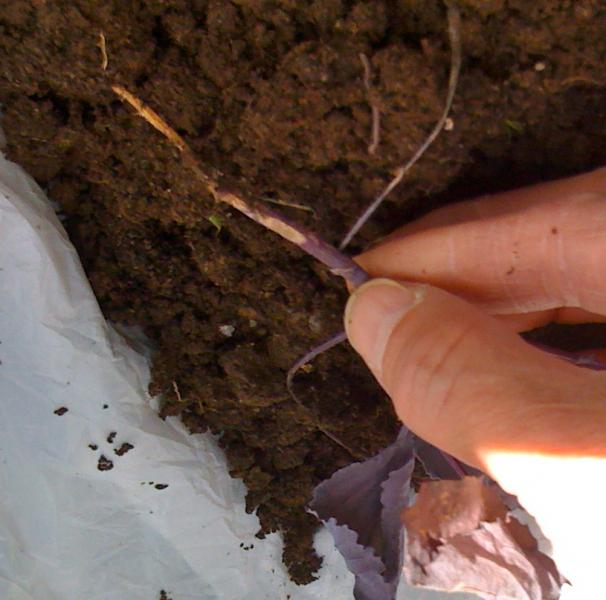
Last Saturday we pulled two seedlings, one cabbage and one cauilflower, that we felt were too sickly to survive. We closely examined their roots and the surrounding dirt, looking for the cause, and in particular for cutworms. The base of the stem of one of the seedlings did look like it had been partially eaten-through, which might be due to a cutworm; although, a real cutworm would have eaten entirely through the stem. The other seedling had no rootlets — the fine root hairs branching off the main root — as if something had eaten them; although cutworms don’t attack a seedling that way. In both cases, we saw no cutworms or any other pest in the soil that could be responsible for the damage. We were puzzled.
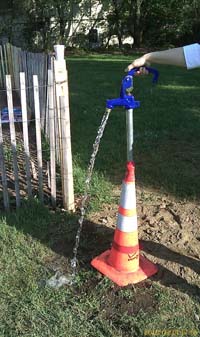 With water, sun and soil, you can have a garden. Without any one of those, you can’t. (OK, so there’s soilless hydroponics and sunless artificial light – not a real garden. But you can’t grow without water!) Until this week, we have been relying on water carted in a gallon at a time from our houses and from the hose of a kind and generous abutter. But late last week, the DPW installed a yard hydrant connected to the street main. Thank you DPW! So now we have running water right next to the garden.
We are considering three different methods of watering the garden – drip irrigation, spot watering, and a sprinkler.
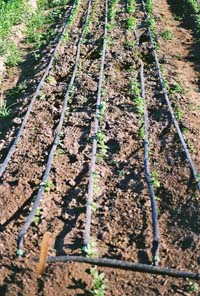 Drip irrigation makes the most efficient use of the water, and was invented by desert farmers. It uses permeable drip hoses or little emitters placed right by the plants. You don’t water empty dirt, you don’t water the weeds, and there’s no runoff. It does take hours of clock time to water, but very little labor – you just turn it on for a while and turn it off later. You can also work in the garden the whole time it’s being watered. But the parts you need for drip irrigation are expensive, and an inappropriate capital investment in this trial year. And it’s kind of ugly, with all those tubes and hoses running around the garden. So while we’d love to do it, we probably won’t. Drip irrigation could be perfect for your backyard garden, though.
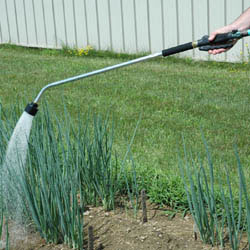 Spot watering with a wand is efficient, inexpensive, and labor intensive. It means walking around and squirting every plant and bed a few times. On the other hand, it’s very enjoyable work, especially on a hot sunny day – the overspray cools you off and makes rainbows. With a "Y" connector, a second wand, and another hose, two gardeners can water at once. And someone can be watering while others are working in other beds.
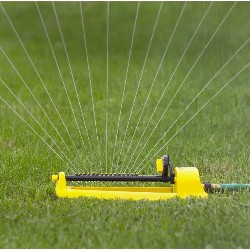 A sprinkler is probably the easiest. It can take hours of clock time, but almost no labor. The rectangular form of the garden is the perfect shape for an oscillating lawn sprinkler. But with a sprinkler, you water everything – the crops, the weeds, the paths, the fence, and some of the grass outside the garden. And you can’t really work in the garden while the sprinkler is on, even with an umbrella.
We do want to be as water-efficient as we can without investing a lot of money. I think that spot-watering with a wand makes the most sense. However, it would be very easy to turn on a sprinkler, have lunch, fly a kite, and turn it off an hour or two later. So maybe we’ll end up doing both.
Whatever way you water, you do have to water enough. The simplest way to know if you’ve watered enough is to scoop out a little bit of soil with your hand. The "wet zone" should be at least one inch deep. You may be surprised how much water it takes to penetrate the soil an inch deep. But if you don’t, the water will just evaporate and nothing will get to the roots. If the soil is dusty dry below an inch or two, then you know you should have watered sooner.
Cultivating the soil between the crops helps the water soak down to the roots where it’s needed, and not run off down the hill to water the poison ivy along the fence. Piling up little rings of soil around plant stems, or using plastic or cardboard collars, helps collect the water here it’s needed most. Mulching helps prevent water from evaporating as well as controlling weeds.
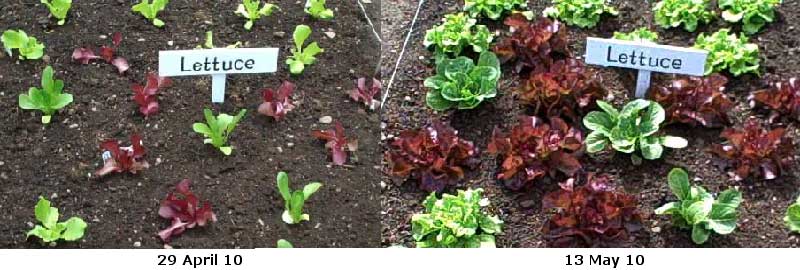
Lettuce has a fascinating history. Click here to learn about it.

Copyright Robbins Farm Garden 2010-2025. All rights reserved. Site design by Carr-Jones, Inc.