Uncategorized
What to do with arugula? A simple, flavorful vegetarian pasta recipe.
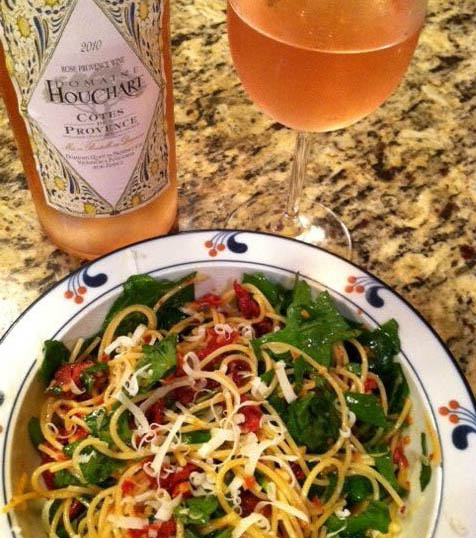
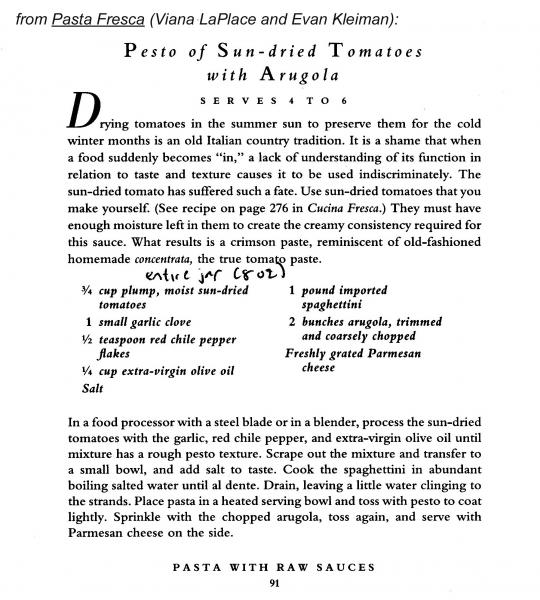
Right now, the arugula is beautiful in the garden. There is plenty of it, and it’s still tender, as well as spicy. Last week, I used my arugula in a salad. But, tonight, John used our share of Saturday’s harvest in one of our favorite pasta recipes, “Pesto of Sundried Tomatoes with Arugula”. The book Pasta Fresca by Viana La Place and Evan Kleiman features very simple, delicious pasta recipes and this is one great example, from their section on “Pasta with Raw Sauces”. Note that, in the printed recipe, John changed the “3/4 cup” sundried tomatoes to “entire jar (8 oz)”. We use sundried tomatoes from Trader Joe’s, though the cookbook authors urge readers to make their own. I’ve not done that yet, though I understand that tomatoes can be readily oven-dried.
As you can see, this dish is very colorful and, with the spicy arugula, sweet sundried tomatoes, dried hot pepper, and garlic, it has a lot of flavor! It’s also vegetarian, as are many, though not all, of the Pasta Fresca recipes.


Videos from the summer
I’ve been remiss in posting several brief videos I took this summer of animal activity in the garden. The first two are of the tremendous activity bees have kept up on the fennel plant. It probably won’t translate well, but when I see these, I think of scenes from Bladerunner or Star Wars, in which huge vertical structures accept vehicle docking at multiple levels.
The third one is pretty hard to watch, entirely attributable to poor photography. It is a view of the compost pile, freshly turned by compost captain Stephen Lee.
Visitors, human and caterpillar

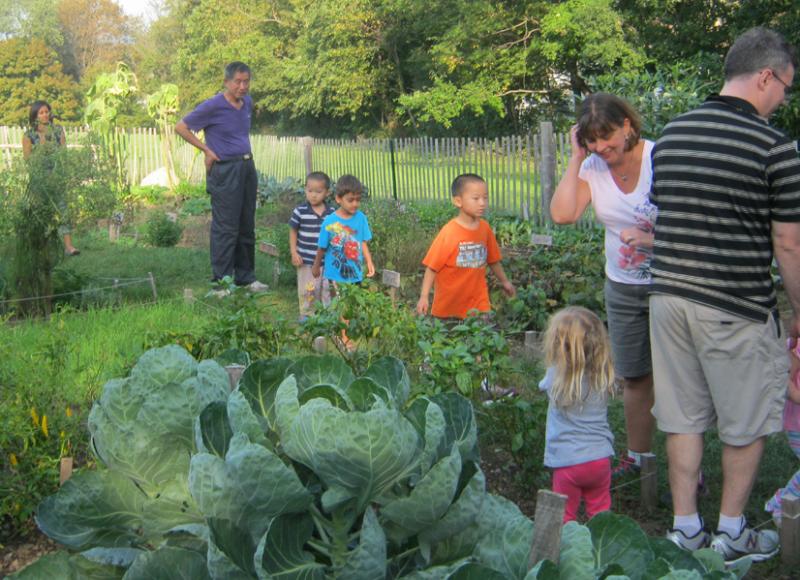
I opened the garden for a couple of hours in the afternoon and quite a few families came through.
Three Chinese-American boys became quite attached, staying over half an hour and wanting to eat various veggies. I gave them a few cherry tomatoes, and even a tomatillo. The older boy wanted to take home seeds and plant. Wait until spring I suggested. He may come Saturday, when I said we’d be there.
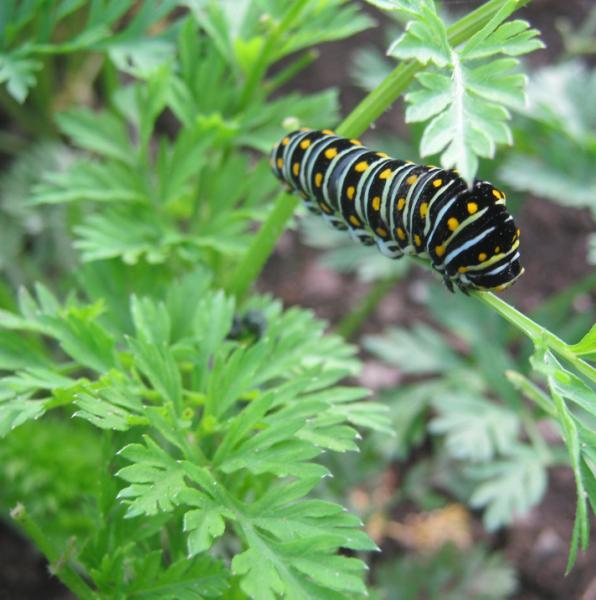
His father came by, not speaking English (Jerry is in the 4th grade at Brackett and is fluent). He found a caterpillar in the carrots.
Visitors, potential comrades in the field
I opened the garden for an hour, and welcomed one mother with daughter, and another parent and child too. She might be interested next year as she can’t garden at her place (too many trees), but she declared herself a novice. I told her we are all learners, and we have some very good teachers!
I sat on a pail and tried to draw the Brussels sprouts. Such plants! The leaf veins really resemble rivers on maps, with smaller branches and brooks flowing in. I tried to count all the sprouts on one plant. There must be around 60, counting all the very little ones and too-big ones. Perhaps 40 to divide now, probably more as time ripens.
On Butterflies and Caterpillars

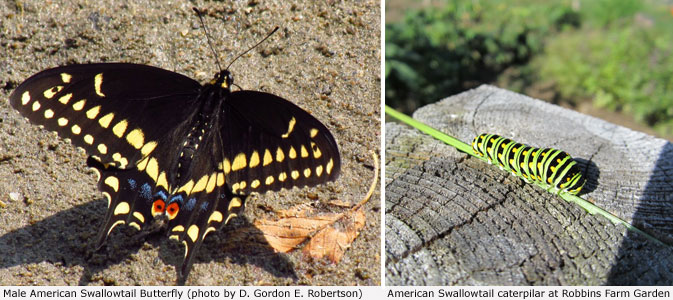
We’ve recently discovered several brightly-striped caterpillars feeding on the carrots, fennel and parsley. At first, we assumed them to be Monarch butterfly (which are similarly striped), but this was questioned by an astute garden visitor (we’re fortunate to have many).
Upon further investigation, we’ve identified the caterpillars as those of the Eastern Black Swallowtail (Papilio polyxenes) also called the American Swallowtail Butterfly. This butterfly’s larvae feed on members of the carrot family: Dill, Fennel, Golden Alexanders, Parsley, Parsnips, Queen Anne’s Lace and Carrots.