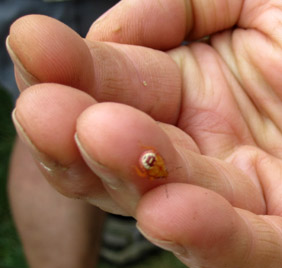
On Saturday morning, July 14th, I discovered this 1/4-inch long, light-orange colored bug on the basil. It proved difficult to photograph, since it really didn’t like to stand still. However Alan, being very patient, finally captured these two shots — one for close-up detail, and the other with my hand for scale.
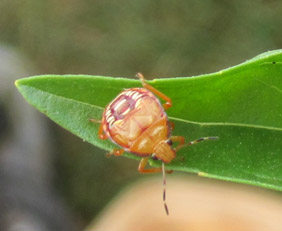
After many hours of searching the internet, I am now convinced that what I found is the nymph stage of a type of Stink Bug — the Spined Soldier Bug, Podisus maculiventris. While many types of Stink Bugs are exceedingly damaging to many food crops in the U.S., this particular bug is actually beneficial because it’s a predator. It kills other insects by literally sucking the life out of them!

So, this is one of the good guys! It’s a good thing that we don’t need to get rid of this bug, as stink bugs are very difficult to control, both organically and conventionally!
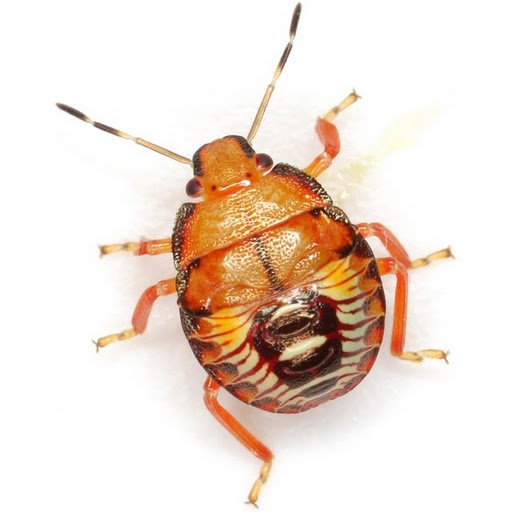
For more info on Spined Soldier Bugs:
1. http://www.uky.edu/Ag/CritterFiles/casefile/insects/bugs/stinkbugs/stinkbugs.htm#nymph
2. http://www.whatsthatbug.com/2010/08/02/immature-predatory-stink-bug-eats-monarch-caterpillar/
3. http://bugguide.net/node/view/237854
4. http://stinkbugsguide.net/infestation.htm
5. http://www.motherearthnews.com/blogs/blog.aspx?id=142346&LangType=1033&blogid=1502
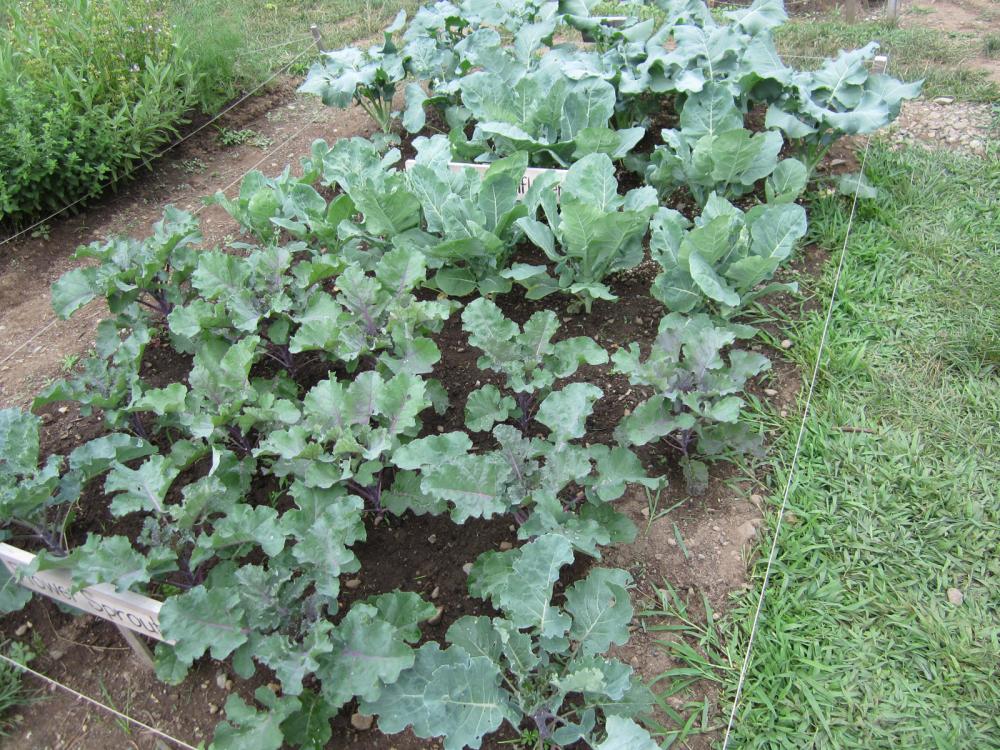

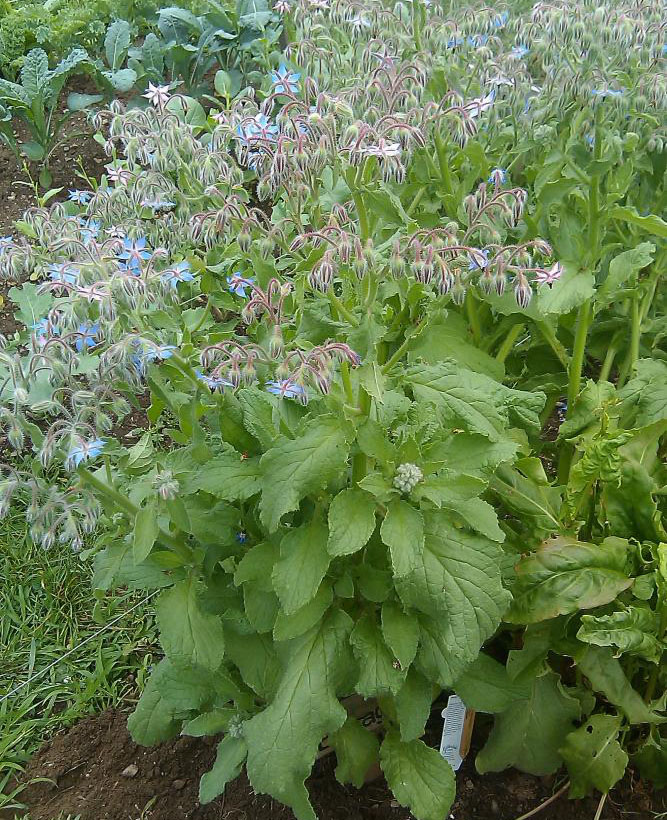
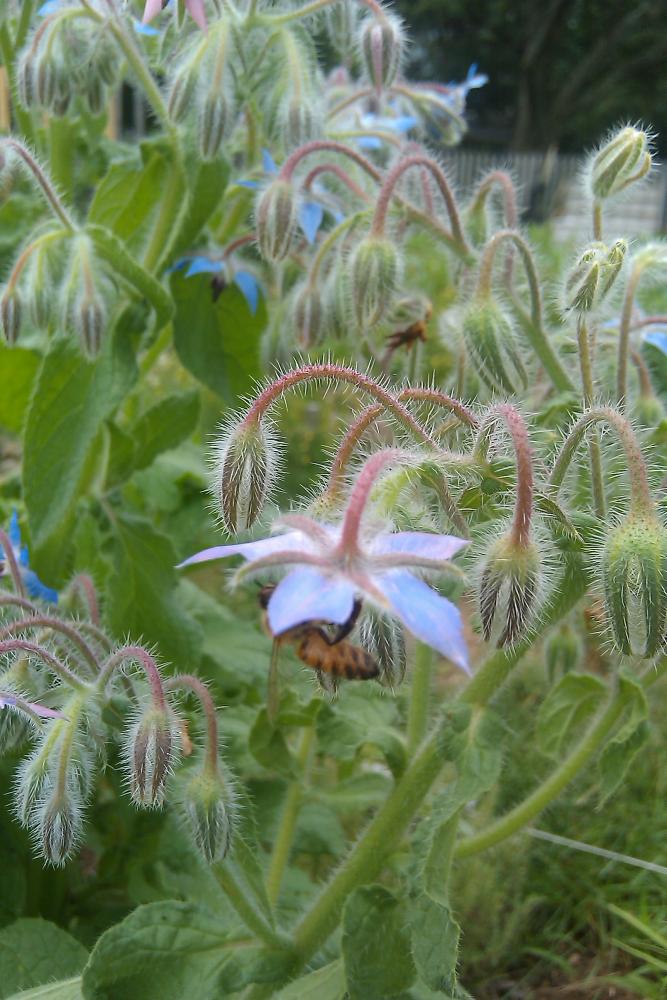 joined one of our two herb beds at the end of April, when we redug and redesigned them. It’s already a hearty bush, about three feet tall and right now in heavy bloom. Known also as "starflower", its blooms appear on the plant in both blue and pink versions–apparently younger and older flowers. The honey bees are enjoying the plant immensely; the plant is known for producing good honey, and we’re always happy to see pollinators in the garden. We’re just learning about borage, since it isn’t commonly found in North American herb gardens. It’s a probable native of North Africa that has spread across Europe, Asia Minor, the Mediterranean, and South America. Borage is apparently easy to grow from seed, but we acquired our plant from Mahoney’s; it’s an annual that is said to reseed itself easily, so we won’t need to shop for it next year.
 Beyond its kitchen garden uses, the plant’s seed oil is a rich source of gamma-linolenic acid (GLA), an omega-6 fatty acid found chiefly in vegetable oils. This fatty acid is found as a dietary supplement said to treat inflammation and auto-immune diseases like rheumatoid arthritis. Finally, borage is a traditional garnish in the Pimms Cup cocktail, the expected beverage at your neighborhood polo match or Wimbledon.


